
If you are remodeling your kitchen or replacing a broken unit, choosing between a batch feed and a continuous feed garbage disposal is the most important decision you’ll make. While both machines grind food waste using high-speed impellers, they differ significantly in safety, convenience, and price.
This guide breaks down the core differences to help you decide which model fits your kitchen workflow.
The Quick Comparison: Batch Feed vs. Continuous Feed
For those in a hurry, here is the essential breakdown of how these two types of disposals compare.
| Feature | Continuous Feed | Batch Feed |
| Operation | Runs as long as the switch is “On.” | Runs only when a specific stopper is inserted. |
| Convenience | High; add waste while it runs. | Moderate; must grind in “batches.” |
| Safety | Lower; open mouth (risk of foreign objects). | Higher; impossible to run without the lid. |
| Price | Generally more affordable. | Generally more expensive. |
| Installation | Requires a wall or air switch. | No external switch needed (built-in). |
| Best For | Large families, heavy cooking. | Homes with children, safety-conscious users. |
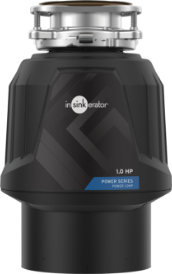

1. What is a Continuous Feed Garbage Disposal?
Continuous feed disposals are the most common units found in modern kitchens. As the name suggests, you turn the machine on via a wall switch or an air switch, and it runs continuously until you turn it off.
How it Works
You turn on the water, flip the switch, and feed food scraps into the drain while the motor is spinning. This allows you to clear a sink full of waste in one fluid motion.
Pros
- Speed and Efficiency: You don’t have to stop and start the machine. You can scrape plates directly into the unit while it is running.
- Affordability: Because they are the industry standard, there are more models available at lower price points.
- Variety: They come in a wide range of horsepower (HP) levels, from 1/3 HP to 1.1 HP.
Cons
- Safety Risks: The “open mouth” design means silverware, jewelry, or small fingers can accidentally fall into the unit while it is operating.
- Splash-back: Food particles or water can occasionally splash back out of the drain if the rubber flange is worn.
2. What is a Batch Feed Garbage Disposal?
Batch feed disposals operate in “batches.” You cannot simply flip a switch to start them; instead, you must fill the chamber with food, then insert a heavy-duty stopper to activate the motor.
How it Works
The stopper acts as the “On/Off” switch. When you push the stopper into the drain and turn it, it engages a magnetic or mechanical sensor that starts the grinding process.
Pros
- Superior Safety: Since the unit only runs when the stopper is covering the drain, there is zero risk of hands or foreign objects (like spoons) being inside the chamber during operation.
- No Switch Required: Because the stopper acts as the switch, you don’t need to wire a wall switch or drill a hole in your countertop for an air switch.
- Less Mess: The stopper prevents any “splatter” or “ejecta” from flying out of the drain during the grinding process.
Cons
- Slower Workflow: If you have a lot of food waste, you have to load it, grind it, remove the stopper, and repeat. This can be tedious for large dinner parties.
- Size: Batch feed units are typically larger and bulkier than continuous feed models, which can take up valuable “under-sink” real estate.
- Price: These units usually carry a premium price tag due to the more complex switching mechanism.
Deep Dive: Technical & Practical Differences
To choose the right model, you need to look beyond the basic operation. Here is how they stack up in specific categories:
Installation and Electrical Requirements
- Continuous Feed: Requires an electrical connection to a switch. If you don’t have a wall switch near the sink, you will likely need to install an Air Switch (a button on the counter that uses air pressure to trigger the disposal).
- Batch Feed: Great for kitchen islands or “switch-less” setups. Since the unit is self-contained, you just need a standard outlet under the sink.
Cost Analysis
| Component | Continuous Feed | Batch Feed |
| Unit Price | $80 – $350 | $200 – $500 |
| Installation Labor | Standard | Standard (may save on electrical work) |
| Lifespan | 8–12 Years | 10–15 Years (typically higher build quality) |
Noise Levels
Generally, batch feed disposals are quieter. Because the stopper is inserted during operation, it acts as a sound muffler. However, high-end continuous feed models (like the InSinkErator Evolution series) feature advanced insulation that makes them nearly silent as well.
The Verdict: Which One Should You Buy?
Choose a Continuous Feed Disposal if:
- You cook large meals frequently and want to dispose of waste quickly.
- You are on a budget and want the best “bang for your buck.”
- You already have a wall switch or air switch installed in your kitchen.
Choose a Batch Feed Disposal if:
- Safety is your #1 priority (especially if you have curious children).
- You want to avoid drilling holes in your granite or quartz countertops for a switch.
- You prefer a cleaner, splatter-free grinding process and don’t mind the extra time.
Regardless of which type you choose, always ensure you select a motor with at least 1/2 Horsepower for light use, or 3/4 to 1 Horsepower for a busy family home.
