
It’s a common kitchen nightmare: you open the cabinet under your sink to grab a cleaning spray, only to find a soggy mess. A leaking garbage disposal is more than just an inconvenience; if left unchecked, it can lead to mold growth and expensive cabinetry damage.
While some leaks are easy fixes involving a simple tightening of a bolt, others—specifically those coming from the bottom of the unit or the power cord—often signal that the machine has reached the end of its life.
Quick Guide: Troubleshooting Disposal Leaks
If you’re in a hurry, use this table to identify the source of the leak and the likely solution.
| Leak Location | Potential Cause | Fix / Solution |
| The Top (Sink Flange) | Failed plumber’s putty or loose mounting bolts. | Re-apply putty and tighten mounting rings. |
| Side (Dishwasher Connection) | Loose hose clamp or cracked rubber hose. | Tighten the clamp or replace the hose. |
| Side (Drain Pipe) | Worn-out gasket or loose screws. | Replace the rubber gasket or tighten the flange. |
| Bottom (Reset Button/Cord) | Internal seal failure. | Replace the entire unit. |
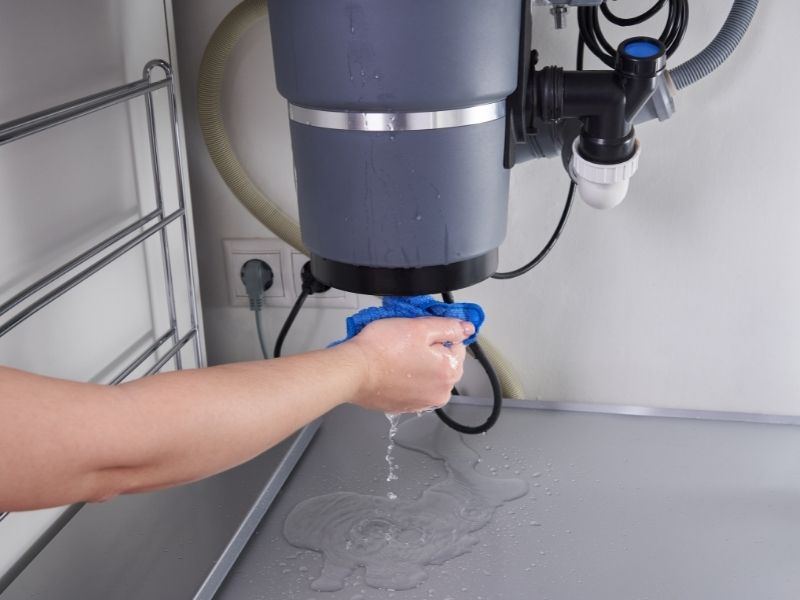
Why Is My Garbage Disposal Leaking? (In-Depth Analysis)
To fix the leak, you first have to find it. Dry the unit completely with a paper towel, then run the water and use a flashlight to pinpoint exactly where the moisture begins.
1. Leaking from the Top (The Sink Flange)
The sink flange is the point where the disposal connects to the sink drain. This area is sealed with a ring of “plumber’s putty.” Over time, this putty can dry out, crack, and shrink, especially if the disposal has been bumped or vibrated heavily.
- The Fix: You’ll need to disconnect the disposal, remove the flange, scrape off the old putty, and apply a fresh bead. It’s a labor-intensive DIY task but very inexpensive.
2. Leaking from the Side (Drain Lines)
There are two pipes connected to the side of your unit: the dishwasher bypass and the main drain pipe.
- The Dishwasher Connection: If the leak is here, it’s usually just a loose metal clamp.
- The Main Drain Pipe: This is secured by a metal flange and a rubber gasket. If the gasket perishes, water will drip down the side of the unit.
3. Leaking from the Bottom or Power Cord (The “Red Flag”)
This is the most serious type of leak. If you see water dripping from the reset button, the bottom housing, or where the power cord enters the unit, the internal seals have failed.
When internal seals break, water enters the motor housing. Because the power cord connects directly to the motor’s electrical components, water leaking through the cord is a significant electrical hazard.
Important: If your disposal is leaking from the bottom or the cord, do not attempt to repair the internal seals. These units are factory-sealed, and once the motor is exposed to water, the unit is a safety risk and should be replaced.
How to Fix a Leaking Garbage Disposal: Step-by-Step
Fix A: Tightening the Mounting Bolts
- Safety First: Unplug the unit or turn off the circuit breaker.
- Locate the three mounting bolts on the ring under the sink.
- Use a screwdriver to ensure they are evenly tightened. Often, vibration from the motor loosens these over time.
Fix B: Replacing the Drain Gasket
- Unscrew the metal plate holding the discharge pipe to the disposal.
- Remove the old rubber gasket (it’s usually black and circular).
- Insert a new gasket and re-tighten the screws.
When to Call a Pro vs. Buy a New Unit
- Repair it if: The leak is coming from the top or side connections. These are “external” plumbing issues.
- Replace it if: The unit is more than 8–10 years old or leaking from the bottom. Modern disposals are often cheaper to replace than the hourly rate of a plumber coming to diagnose a terminal motor failure.
Helpful Video Resources
For a visual walkthrough, these highly-rated tutorials can guide you through the repair process:
Prevention: How to Avoid Future Leaks
- Avoid Harsh Chemicals: Frequent use of caustic drain cleaners can eat away at the rubber seals and plastic components of your disposal.
- Run Cold Water: Always run cold water while grinding food. Hot water can melt fats which then coat the blades and seals, leading to buildup and eventual leaks.
- Don’t Grind “Hard” Items: Avoid pits, bones, and shells. The excessive vibration from grinding these can loosen the mounting bolts and break the sink seal.
