
When it comes to upgrading your kitchen sink, the debate usually narrows down to two industry titans: InSinkErator and Waste King. While they both tackle food waste, they represent two completely different approaches to engineering, price, and performance.
This comprehensive guide merges all the technical data, pricing structures, and performance benchmarks to help you decide which brand belongs in your kitchen.
Main Differences at a Glance
If you want the “too long; didn’t read” version, here is the core breakdown of how these brands differ
The Comparison Table
| Feature | InSinkErator (Evolution Series) | Waste King (Legend Series) |
| Price Range | $130 – $400 (Premium) | $75 – $160 (Value) |
| Motor Type | Induction (High Torque) | Permanent Magnet (High Speed) |
| Grinding Fineness | Ultra-Fine (Up to 3 stages) | Standard/Fine (Single stage) |
| Noise Level | Ultra-Quiet (SoundSeal) | Moderate to Loud |
| Installation | Professional 3-Bolt Mount | DIY-Friendly EZ Mount |
| Grinding Speed | 1,725 RPM | 2,500 – 2,800 RPM |
| Power Cord | Often Sold Separately | Usually Pre-Installed |
| Warranty | 5 to 10 Years | 5 Years to Lifetime |
| Best For | Septic systems & Quiet homes | Budget-conscious & DIYers |
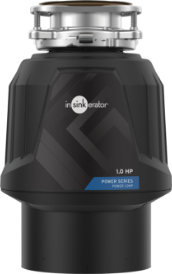

1. Price and Value: The “Bang for Your Buck” Factor
The most immediate difference is the impact on your wallet. Waste King is consistently the more affordable brand, offering significantly more power for a lower price point.
- Entry-Level: A basic Waste King starts around $75–$85, whereas a basic InSinkErator Badger typically starts around $125–$140.
- High-End: The gap widens at the top. A 1.0 HP Waste King L-8000 (their flagship) is often priced under $160. Meanwhile, the InSinkErator Evolution Excel (their flagship) can retail for $350–$400.
Summary: Waste King wins on raw value, while InSinkErator positions itself as a luxury investment.
2. Grinding Fineness: Liquefaction vs. Shredding
“Grinding fineness” is crucial for the health of your plumbing and septic system.
- InSinkErator (Multi-Stage Grinding): Their premium units use MultiGrind Technology.1 The waste goes through two or three stages of grinding, effectively turning solids into a fine “slurry.” This is the best choice for homeowners with septic tanks or older, clog-prone pipes.
- Waste King (High-Speed Pulverizing): Waste King relies on raw speed (up to 2,800 RPM). While it doesn’t have multiple “stages,” the sheer velocity pulverizes food scraps into very small pieces. It is effective, but the resulting particles are generally not as fine as those produced by InSinkErator’s 3-stage models.
3. Motor Mechanics: Torque vs. Speed
The “heart” of the machine determines how it handles tough scraps like peach pits or small bones.
- InSinkErator (Induction Motor): These motors function like a heavy-duty tractor. They spin at a lower, consistent speed (~1,725 RPM) but provide high torque. They are heavier, built to last, and move through tough materials with brute force.
- Waste King (Permanent Magnet Motor): These function like a sports car. They reach maximum speed the instant you flip the switch. This “instant-on” velocity creates high-impact force that shatters food scraps before a jam can even occur.
4. Sound and Noise Insulation
If you have an open-concept home, the noise of a garbage disposal can be a major annoyance.
- InSinkErator (The Gold Standard): Their SoundSeal Technology is the best in the industry. Through insulated motor housings and anti-vibration mounts, their high-end models are whisper-quiet. You can easily hold a conversation while the unit is running.
- Waste King (The Standard): Waste King units are not excessively loud, but they lack the heavy insulation of InSinkErator. You will definitely hear the motor’s high-pitched whir and the clatter of food being destroyed.
5. Installation: 3-Bolt vs. EZ Mount
- InSinkErator (3-Bolt Mount): This is the professional standard. It uses a stainless steel ring and three bolts to create a rock-solid, leak-proof seal. While slightly more complex to install, it is the most durable setup.
- Waste King (EZ Mount): Most Waste King models use a “twist and lock” plastic system.2 It is incredibly lightweight and can be installed by a DIYer in minutes without tools. However, some find the plastic components feel less “premium” than the 3-bolt steel version.
6. Durability and Corrosion Resistance
- InSinkErator: Their entry-level models (Badger series) use galvanized steel, which can eventually rust through and leak. However, their premium Evolution series uses stainless steel, which is highly durable.
- Waste King: Almost all Waste King units feature glass-filled nylon grind chambers. Because this is a high-strength composite, it is 100% corrosion-proof. A Waste King will never rust through, which is why they can offer Lifetime Mechanical Warranties.
Final Verdict: Which Should You Choose?
Choose InSinkErator if:
- You want the quietest kitchen experience possible.
- You have a septic system and need the finest possible grind.
- You prefer a heavy-duty, professional-grade stainless steel build.
Choose Waste King if:
- You want the best value (more horsepower for half the price).
- You are doing a DIY installation and want the easiest process.
